In the realm of cybersecurity, free SIEM tools emerge as formidable guardians, empowering organizations to bolster their defenses against malicious threats. These tools, designed to provide comprehensive security information and event management (SIEM) capabilities, offer a cost-effective and accessible solution for safeguarding your digital assets.
This guide delves into the world of free SIEM tools, exploring their features, deployment strategies, use cases, and advantages. We will also provide insights into the future of these tools and help you navigate the process of selecting the best option for your specific needs.
Free SIEM Tools Overview
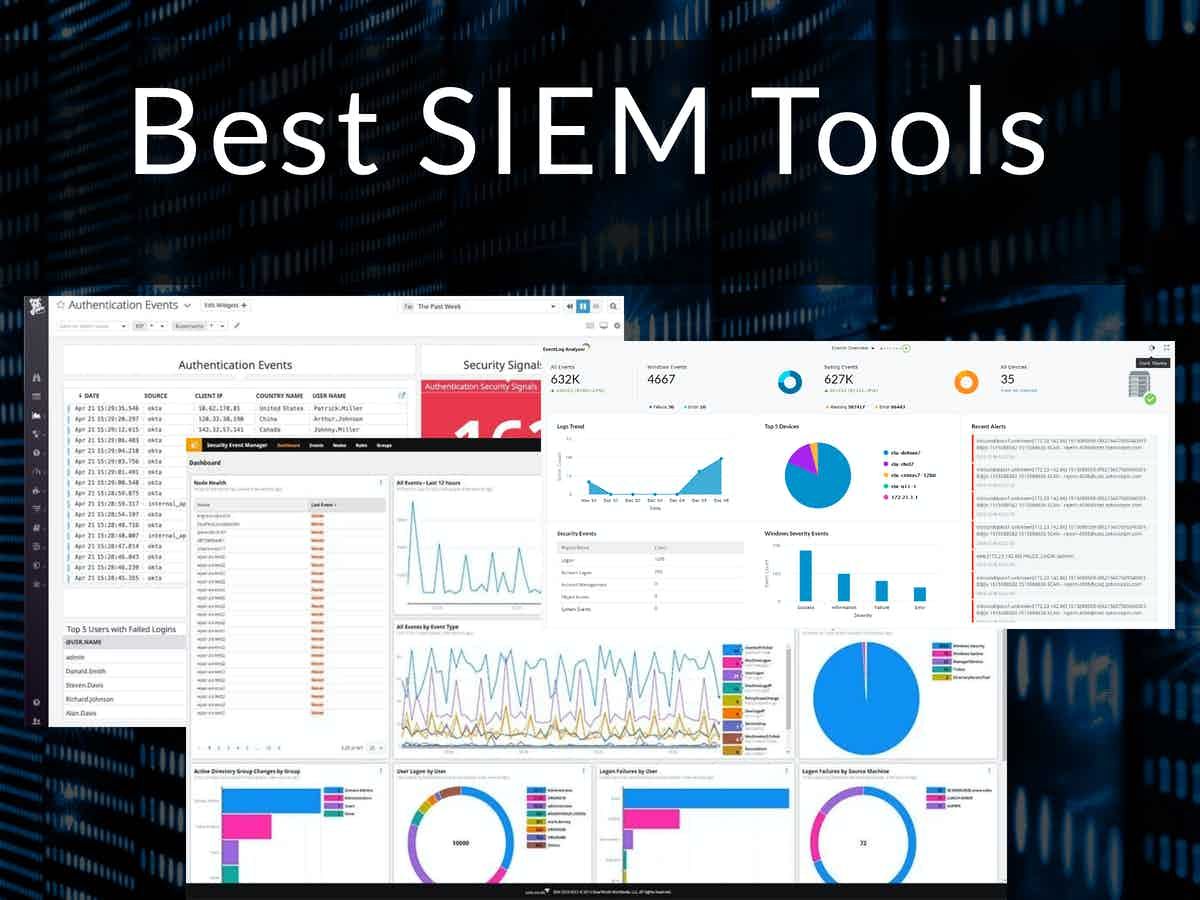
SIEM (Security Information and Event Management) tools are software solutions that aggregate, analyze, and correlate security-related data from multiple sources within an organization’s IT infrastructure. They provide real-time monitoring and analysis of security events, helping organizations detect, investigate, and respond to potential threats.
Using free SIEM tools offers several benefits, including cost savings, flexibility, and ease of deployment. These tools are often open source, allowing organizations to customize and extend their functionality as needed. Additionally, they provide a comprehensive view of security events, enabling organizations to identify patterns and trends that may indicate potential threats.
Examples of Popular Free SIEM Tools
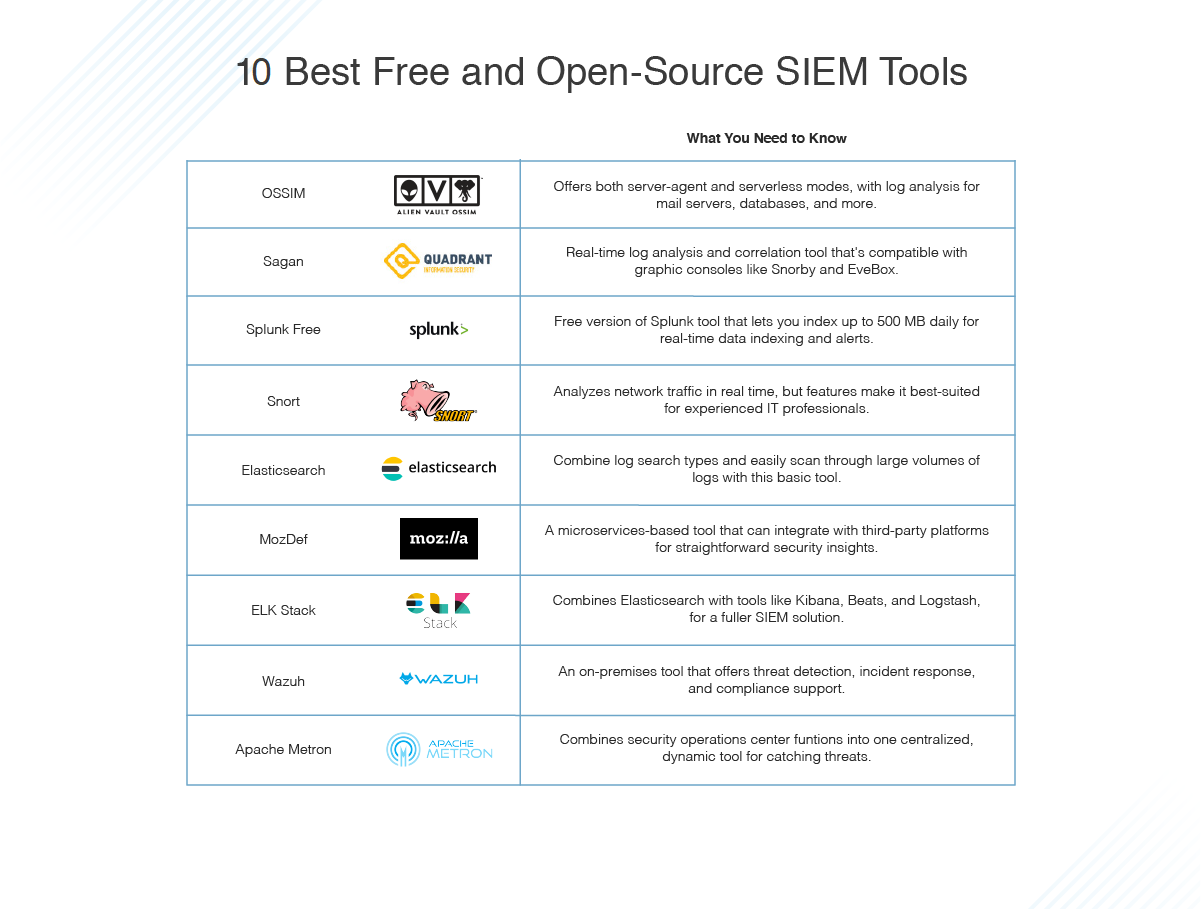
- OSSIM: An open-source SIEM tool that provides real-time monitoring, log analysis, and incident response capabilities.
- AlienVault USM: A free and open-source SIEM solution that includes threat intelligence, vulnerability management, and incident response modules.
- Logstash: A popular open-source data collection and processing pipeline that can be used to build custom SIEM solutions.
Features of Free SIEM Tools

Free SIEM tools offer a range of features that can help organizations improve their security posture. These features include:
Log collection and aggregation:Free SIEM tools can collect logs from a variety of sources, including servers, network devices, and security appliances. This data can then be aggregated and stored in a central location for analysis.
Log analysis and correlation:Free SIEM tools can analyze logs to identify patterns and trends that may indicate a security threat. They can also correlate events from multiple sources to provide a more complete picture of an attack.
Incident detection and response:Free SIEM tools can detect security incidents and generate alerts. They can also provide guidance on how to respond to an incident, such as by blocking an IP address or quarantining a file.
Reporting and visualization:Free SIEM tools can generate reports on security activity. They can also provide visualizations of data, such as charts and graphs, to make it easier to understand security trends.
Comparison of Free SIEM Tools
There are a number of different free SIEM tools available. Some of the most popular options include:
- OSSIM:OSSIM is a free and open source SIEM tool that is widely used by organizations of all sizes.
- Security Onion:Security Onion is a free and open source SIEM tool that is designed to be easy to use and deploy.
- Snorby:Snorby is a free and open source SIEM tool that is based on the Snort intrusion detection system.
- ELSA:ELSA is a free and open source SIEM tool that is designed for small and medium-sized businesses.
The features of these free SIEM tools vary, so it is important to compare them carefully before choosing one. Some of the key factors to consider include:
- Log collection and aggregation capabilities:The type and number of logs that a SIEM tool can collect and aggregate.
- Log analysis and correlation capabilities:The ability of a SIEM tool to analyze logs and identify patterns and trends.
- Incident detection and response capabilities:The ability of a SIEM tool to detect security incidents and generate alerts.
- Reporting and visualization capabilities:The ability of a SIEM tool to generate reports on security activity and provide visualizations of data.
Limitations of Free SIEM Tools
Free SIEM tools can be a valuable asset for organizations of all sizes. However, it is important to be aware of their limitations. These limitations include:
- Limited scalability:Free SIEM tools may not be able to scale to meet the needs of large organizations.
- Limited support:Free SIEM tools may not come with the same level of support as commercial SIEM tools.
- Limited features:Free SIEM tools may not offer the same range of features as commercial SIEM tools.
Organizations should carefully consider the limitations of free SIEM tools before deciding whether to use one.
Deployment and Configuration of Free SIEM Tools

Deploying and configuring free SIEM tools requires careful planning and execution. Let’s explore the key steps and considerations involved in this process.
Before deploying any SIEM tool, it’s crucial to define your security requirements and objectives. This will help you select the right tool that aligns with your specific needs. Additionally, ensure your infrastructure meets the minimum system requirements for the chosen tool to avoid any compatibility issues.
System Requirements
- Hardware specifications (CPU, RAM, storage)
- Operating system compatibility
- Network connectivity and firewall configurations
- Log storage capacity and retention policies
Deployment Options
Free SIEM tools offer various deployment options, including:
- On-premises deployment:Installed and managed within your own infrastructure, providing greater control and customization.
- Cloud-based deployment:Hosted and managed by a third-party provider, offering scalability and reduced maintenance overhead.
- Virtual appliance deployment:Pre-configured and ready-to-use virtual machines, simplifying deployment and reducing configuration time.
Configuration Best Practices
Once deployed, configuring your SIEM tool effectively is essential for optimal performance and accurate threat detection.
- Log source integration:Connect all relevant data sources, such as firewalls, servers, and applications, to ensure comprehensive log collection.
- Log normalization:Standardize log formats to facilitate efficient parsing and analysis.
- Rule creation:Define custom rules and alerts to detect specific threats and security events.
- Dashboard customization:Tailor dashboards to display critical information and provide real-time visibility into your security posture.
- Regular maintenance:Keep your SIEM tool updated with the latest security patches and software releases to ensure optimal performance and security.
Use Cases for Free SIEM Tools
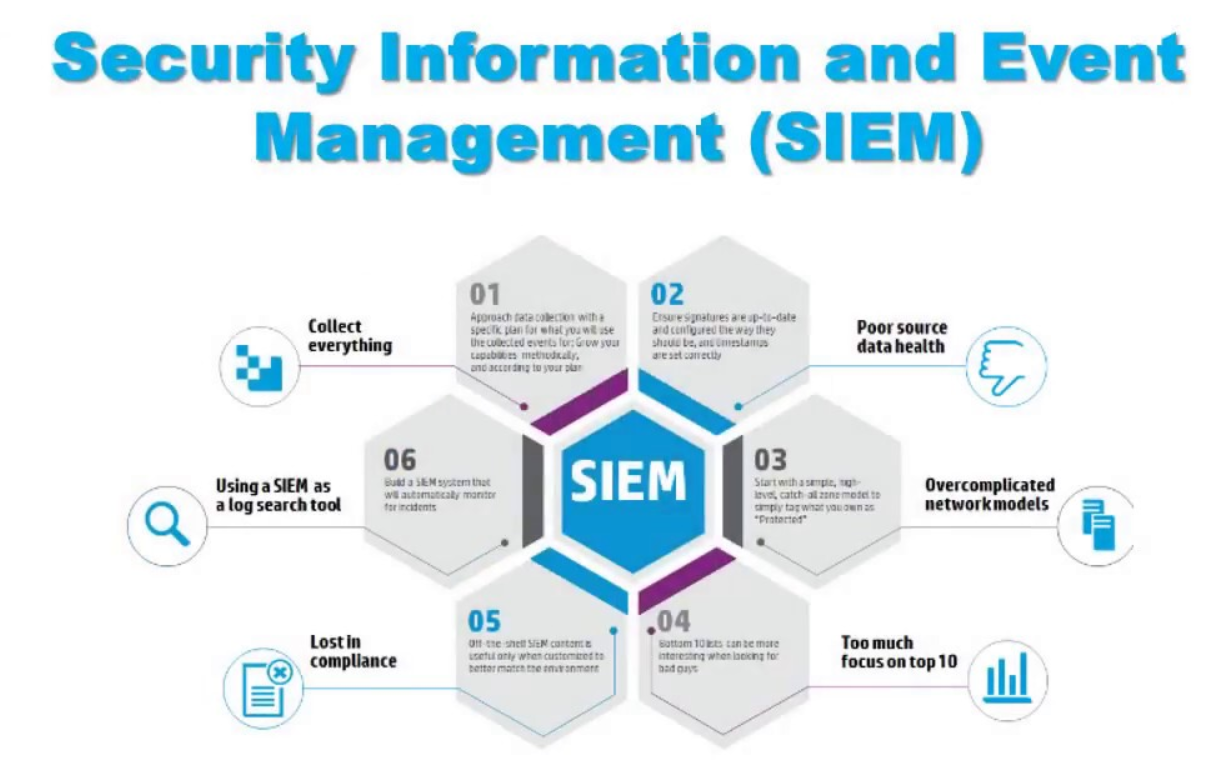
Free SIEM tools offer a range of capabilities that make them suitable for various security use cases. These tools provide cost-effective solutions for organizations looking to enhance their security posture without breaking the bank.
Threat Detection and Response
Free SIEM tools play a crucial role in threat detection and response by continuously monitoring and analyzing security logs from multiple sources. They use advanced algorithms to identify suspicious activities, such as unauthorized access attempts, malware infections, and network intrusions.
If you’re in the market for free SIEM tools, you’re in luck! There are several great options available online. But before you dive in, you might want to check out our siRNA design tool. This tool can help you design and optimize your siRNA sequences for maximum efficiency.
Once you’ve got your siRNA sequences ready, you can head back to our list of free SIEM tools and start monitoring your network for threats.
Upon detecting a potential threat, these tools can trigger alerts, generate reports, and even automate response actions, such as blocking malicious IP addresses or isolating compromised systems.
In the realm of cybersecurity, free SIEM tools provide a valuable means of monitoring and analyzing security events. For seamless documentation and annotation of these events, consider using the snipping tool on max. Its advanced features empower you to capture specific areas of your screen, making it an indispensable companion for comprehensive SIEM analysis.
Compliance Monitoring
Free SIEM tools can assist organizations in meeting compliance requirements by providing visibility into security events and activities. They can generate reports and dashboards that demonstrate compliance with industry standards and regulations, such as PCI DSS, HIPAA, and ISO 27001.
This documentation can be invaluable during audits and inspections.
Security Incident Management
Free SIEM tools can facilitate efficient security incident management by providing a centralized platform for collecting, analyzing, and responding to security incidents. They enable security teams to quickly identify the scope and impact of an incident, prioritize response efforts, and coordinate with other departments, such as IT operations and legal counsel.
Real-World Examples
Numerous organizations have successfully deployed free SIEM tools to enhance their security posture. For instance, a small business used a free SIEM tool to detect and respond to a phishing attack that targeted their employees. The tool identified suspicious email attachments and alerted the security team, who promptly quarantined the affected systems and prevented the spread of malware.Another example involves a healthcare organization that used a free SIEM tool to monitor compliance with HIPAA regulations.
The tool provided visibility into security events and activities, allowing the organization to generate reports and demonstrate compliance during an audit.
Advantages and Disadvantages of Free SIEM Tools
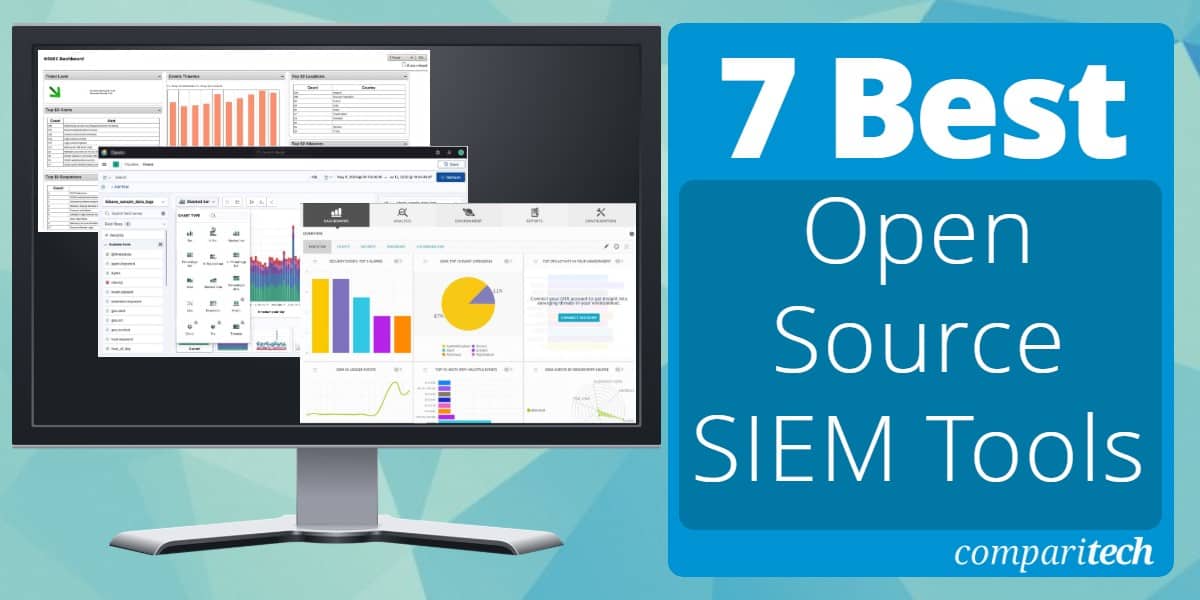
Free SIEM tools offer a range of benefits and drawbacks. Let’s explore them to help you make an informed decision.
Advantages of Free SIEM Tools
- Cost Savings:Free SIEM tools eliminate licensing and subscription fees, reducing IT expenses.
- Accessibility:They are widely available and accessible to organizations of all sizes.
- Open Source:Many free SIEM tools are open source, allowing for customization and community support.
Disadvantages of Free SIEM Tools
- Limited Features:Free SIEM tools may not offer the same comprehensive feature set as paid solutions.
- Support Limitations:Support may be limited or non-existent, leaving organizations to rely on community forums or self-help resources.
- Scalability Issues:Free SIEM tools may struggle to handle large volumes of data or complex environments.
Comparison with Paid SIEM Tools
Paid SIEM tools offer a wider range of features, dedicated support, and scalability, but they come at a cost. Free SIEM tools provide a cost-effective alternative for organizations with limited budgets or those starting their SIEM journey. However, organizations with complex security requirements or large data volumes may benefit from the advanced capabilities of paid solutions.
Choosing the Right Free SIEM Tool
Selecting the right free SIEM tool is crucial to effectively monitor and protect your IT infrastructure. Here are some key factors to consider:
Log Source Compatibility
- Determine the types of logs your organization generates, such as syslogs, Windows Event Logs, and security logs.
- Ensure the SIEM tool supports the formats and protocols of your log sources.
Scalability and Performance
- Estimate the volume of logs you need to process and store.
- Choose a SIEM tool that can handle your current and future log volumes without performance degradation.
Security Features
- Identify the specific security use cases you need to address, such as intrusion detection, threat hunting, and incident response.
- Select a SIEM tool that provides the necessary security features and functionality.
Deployment and Management
- Consider your organization’s IT resources and expertise.
- Choose a SIEM tool that aligns with your deployment and management capabilities.
User Interface and Usability
- Evaluate the SIEM tool’s user interface for ease of use, customization, and visualization capabilities.
- Ensure the tool provides clear and actionable insights to security analysts.
Vendor Support and Community
- Research the vendor’s reputation for support and responsiveness.
- Consider the availability of documentation, training, and community resources.
Future of Free SIEM Tools
Free SIEM tools are rapidly evolving, driven by advances in technology and the growing need for cybersecurity solutions. As the threat landscape continues to expand, organizations of all sizes are seeking cost-effective ways to protect their networks and data.
Emerging Technologies
Emerging technologies such as artificial intelligence (AI) and machine learning (ML) are playing a significant role in shaping the future of free SIEM tools. AI and ML algorithms can automate threat detection and response, reducing the workload for security teams and improving the overall efficiency of SIEM systems.
Potential Benefits
The future of free SIEM tools holds several potential benefits for organizations:
- Enhanced threat detection and response capabilities
- Reduced security costs and operational expenses
- Improved security posture and compliance
- Increased visibility and control over network activity
Challenges
Despite the promising future, free SIEM tools also face some challenges:
- Limited scalability and performance
- Lack of advanced features and functionality
- Security concerns and data privacy issues
Despite these challenges, the future of free SIEM tools looks promising. As technology continues to advance and the need for cybersecurity solutions grows, free SIEM tools are likely to become even more powerful and accessible, enabling organizations to protect their networks and data effectively and efficiently.
Common Queries
What are the benefits of using free SIEM tools?
Free SIEM tools offer several advantages, including cost savings, accessibility, and ease of deployment. They provide organizations with a cost-effective way to enhance their security posture without compromising on functionality.
What are some limitations of free SIEM tools?
While free SIEM tools offer significant benefits, they may have certain limitations compared to paid tools. These limitations can include fewer features, limited support, and potential performance constraints.
How do I choose the right free SIEM tool for my organization?
Selecting the right free SIEM tool requires careful consideration of your organization’s specific needs. Factors to consider include the number of events you need to monitor, the types of threats you want to detect, and your budget.
